
INTERPRETATION BOOTHS: A COMPARISON(TourGo Guide)
In the fast-paced world of international conferences, summits, and multilingual events, interpretation booths play a critical role. These seemingly simple enclosures serve as the nerve centers for interpreters who make communication possible across language barriers. But not all interpretation booths are created equal. From portable to permanent setups, understanding the differences can make a major impact on the success of an event.
In this article, we’ll take a close look at interpretation booths, compare the different types, and explain what you should consider when selecting one for your event.
Why the Right Booth Matters
Choosing the right interpretation booth isn’t just about meeting technical specifications. It affects the comfort and performance of interpreters, the clarity of the translation, and the overall professionalism of the event. A poor setup can lead to distractions, miscommunication, or worse—technical failure in the middle of a keynote address.
Here’s what the right booth offers:
-
Sound insulation for focused interpreting
-
Ventilation to keep interpreters comfortable during long sessions
-
Clear visibility of the stage and audience
-
Technical compatibility with microphones and headsets
-
Accessibility for setup and teardown
Types of Interpretation Booths
Let’s break down the most common types of interpretation booths, each with its own pros and cons depending on the venue and the nature of the event.
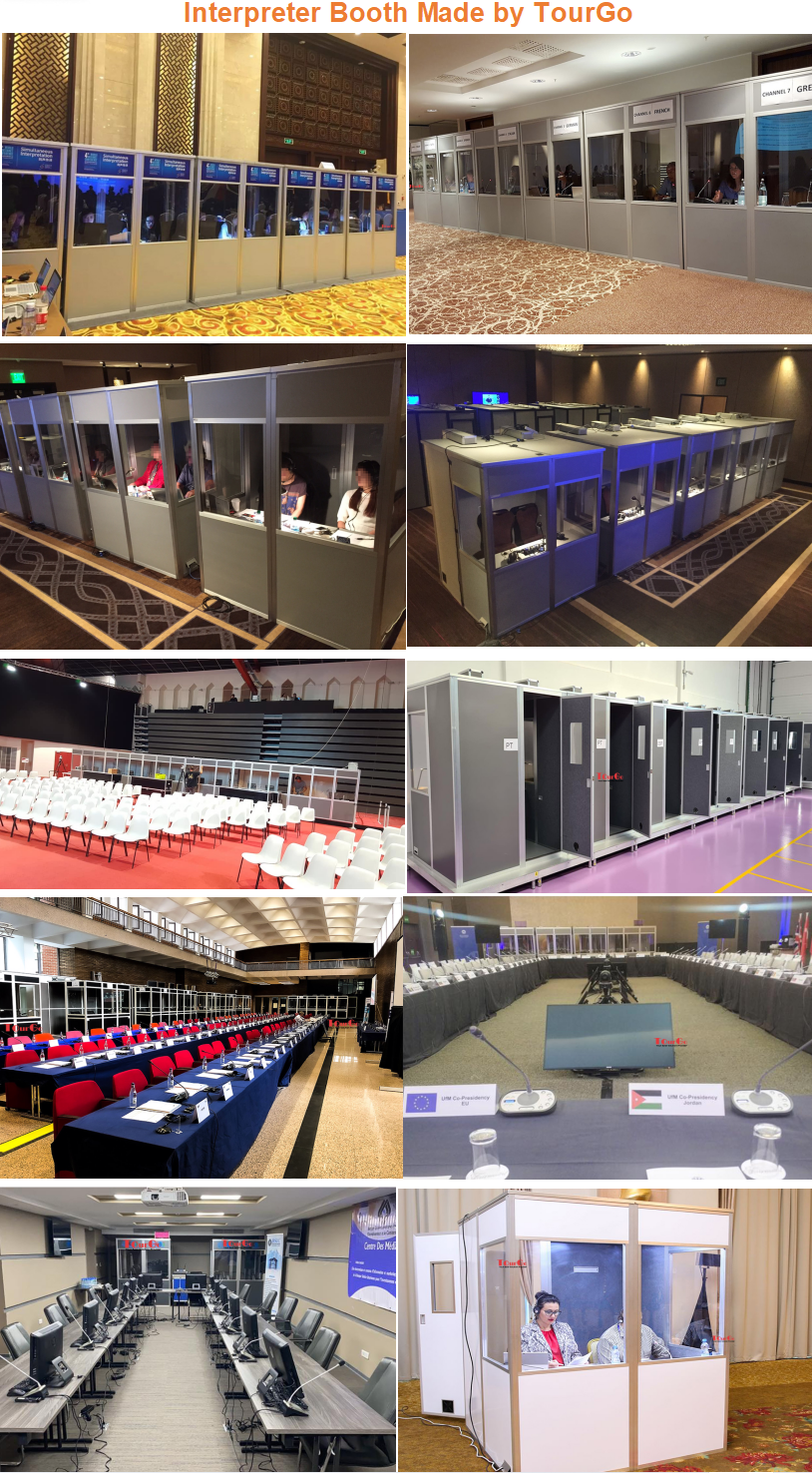
1. Standard ISO-Compliant Booths
These booths follow the ISO 4043 standard and are considered the gold standard for professional interpreting environments.
Pros:
-
Superior sound insulation
-
Comfortable for long events
-
Meets international conference standards
-
Typically used in high-profile summits and UN-level gatherings
Cons:
-
Requires professional installation
-
Bulky and less portable
-
More expensive to rent or buy
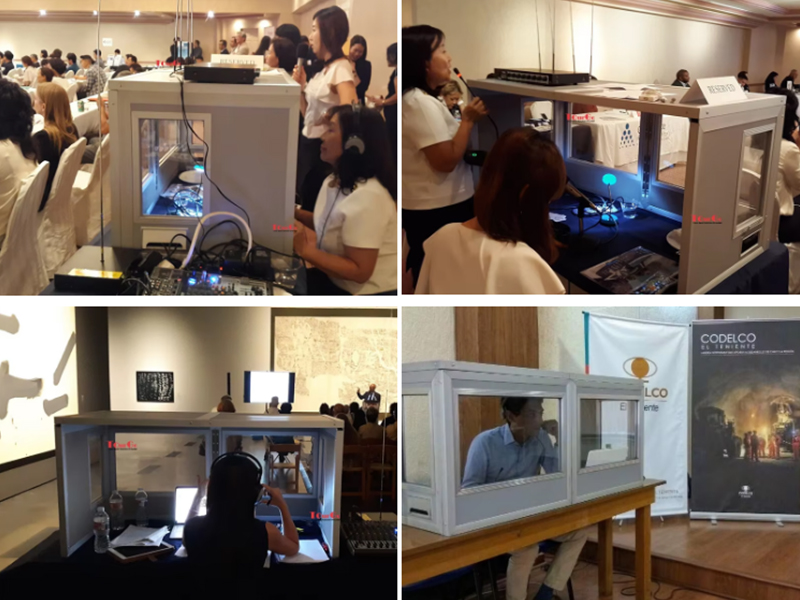
2. Tabletop Booths
These are lightweight booths without full enclosures, often used for short-term or small-scale events.
Pros:
-
Easy to transport and set up
-
More affordable than full booths
-
Great for smaller venues
Cons:
-
Limited sound isolation
-
Can be distracting in noisy environments
-
Less privacy for interpreters
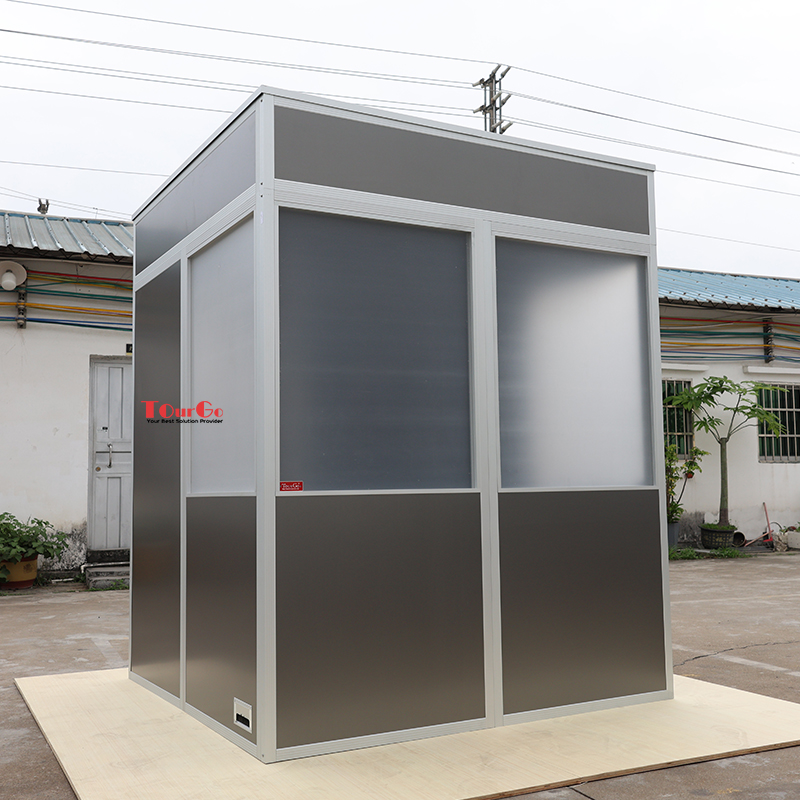
3. Portable Soundproof Booths
These fall between tabletop and ISO booths in terms of functionality and cost. They’re often modular and can be assembled on-site.
Pros:
-
Decent sound isolation
-
Flexible for multiple room sizes
-
Easier to move than full-size booths
Cons:
-
May require trained personnel to assemble
-
Soundproofing may not match ISO standards
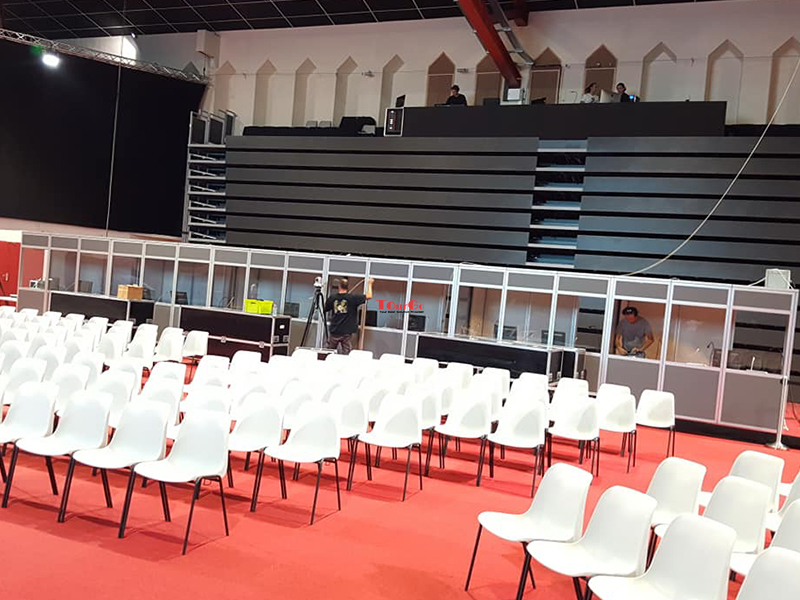
4. Built-In/Fixed Booths
Some venues, especially those designed for multilingual events (like UN buildings or European Parliament halls), have built-in booths.
Pros:
-
Excellent quality and integration
-
Permanent setup eliminates hassle
-
Top-tier sound and technical capabilities
Cons:
-
Only available in select venues
-
Not transportable
-
Expensive to construct
How TourGo Can Help
We specialize in providing interpretation services that are both high-quality and logistically seamless. If your event requires interpretation booths, we offer guidance, equipment, and professional interpreters who know how to work efficiently in any setup—from compact tabletop booths to fully enclosed ISO-standard booths.
Why choose us?
1, Professional booth rentals for all event sizes
2, Technical support for AV integration and booth setup
3, Experience in government, legal, medical, and corporate sectors
4, Flexible scheduling, including urgent and same-day requests
Whether you’re hosting a global conference or a business seminar. we’ll provide the tools and talent you need for seamless multilingual communication.
Post time: Jun-02-2026