
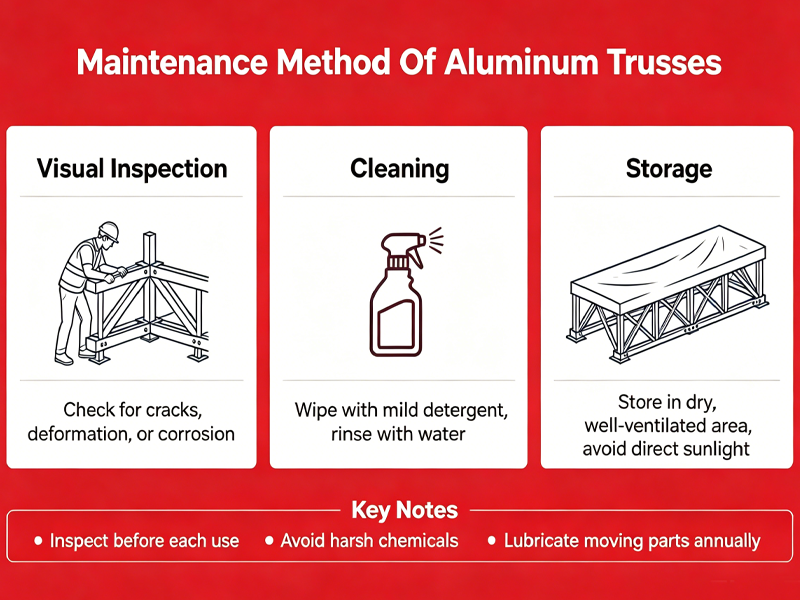
Here’s a clear, step-by-step guide on the maintenance methods for aluminum trusses, combining practical safety tips and longevity best practices:
1. Regular Inspection
Frequency: Before and after each use, and periodically for long-term installations.
Check for:
- Cracks, dents, or deformities in the truss body
- Loose or damaged connectors (spigots, bolts, pins)
- Corrosion or discoloration, especially at weld points or joints
- Bent or warped sections that may affect load capacity
Tip: Use a flashlight for hidden areas and check inside hollow sections.
2. Cleaning
Purpose: Removes dirt, dust, and residues that may cause corrosion or reduce aesthetic appeal.
Method:
- Wipe the truss with a soft cloth or sponge.
- Use mild soap and water for stubborn dirt. Avoid harsh chemicals.
- Rinse thoroughly and dry completely to prevent water spots or oxidation.
Tip: For outdoor-used trusses, rinse after rain or dust storms.
3. Lubrication
Purpose: Keeps moving parts smooth and prevents seizing.
Where to lubricate:
- Spigot connections
- Quick-lock pins
- Hinges (if any)
Recommended lubricant: Light machine oil or silicone spray. Avoid excessive oil, which can attract dust.
4. Tightening and Adjustment
Check: All bolts, nuts, and spigot pins before each installation.
Tip:
- Use a torque wrench if recommended by the manufacturer.
- Replace any worn-out fasteners immediately to maintain safety.
5. Proper Storage
Conditions:
- Dry, ventilated area
- Flat surfaces or hanging racks
- Avoid stacking in a way that causes bending
Tip:
- Use protective covers to avoid scratches or dust accumulation
- Keep away from harsh chemicals or saltwater environments
6. Handling Guidelines
Do:
- Lift trusses with at least two people for long sections
- Use proper rigging equipment (slings, clamps)
- Protect edges to prevent dents during transport
Don’t:
- Drag trusses across rough surfaces
- Exceed the recommended load limit
- Weld or drill without manufacturer approval
7. Periodic Professional Check
Even with routine maintenance, consider a professional inspection every 6–12 months if used frequently or in high-stress conditions.
- Structural engineers can test load-bearing capacity and check for hidden fatigue
- Welding points can be inspected for micro-cracks
- Helps extend lifespan and ensure safety for large-scale events
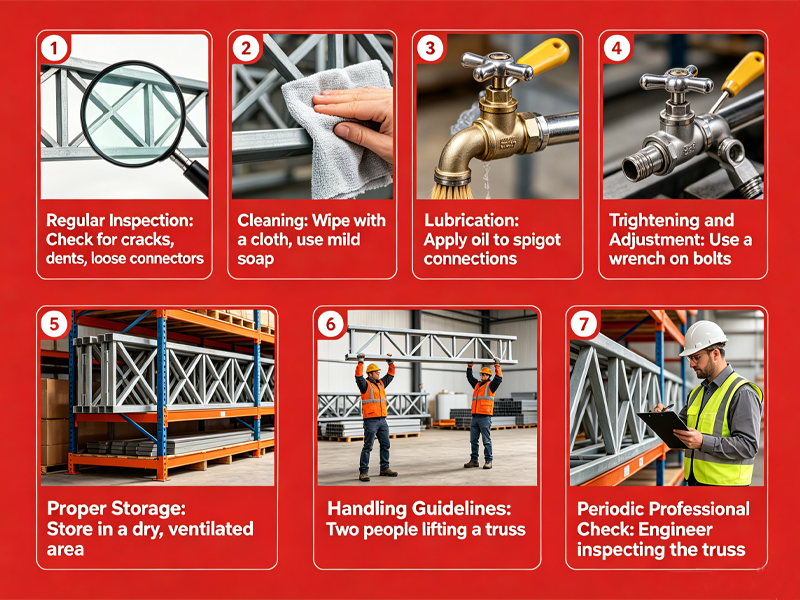
Summary:
Regular inspection, careful cleaning, proper lubrication, secure fasteners, safe storage, and professional checks are the key steps to maintain aluminum trusses.
With proper maintenance, aluminum trusses can last 10–15 years or more, even under heavy touring and outdoor use.
Post time: Jun-02-2026