
How to Design a Customized Flight Case for Client? (TourGo Guide)
Professional event gear, AV devices, LED screens, audio consoles and precision rental equipment cannot always rely on standard off-the-shelf flight cases. Every rental company, production team and studio has unique equipment sizes, transport workflows and branding requirements. That is why TourGo builds custom flight cases that are engineered around the client’s gear, not the other way around. This guide walks through our standard design workflow to help buyers clearly understand how we turn their requirements into durable, production-ready road cases.
Step 1: Requirement & Equipment Confirmation (Initial Consultation)
Before drawing any CAD layout, our sales and engineering team collects full information from the client.
We ask for:
- Exact dimensions, weight and model number of all equipment to be packed
- Equipment photos, CAD drawings or physical samples (highly recommended for irregular-shaped gear)
- Transport scenarios: air freight, truck touring, frequent loading/unloading, stackable or trolley use
- Functional needs: built-in sliding worktable, drawers, cable storage, pop-up support, lift structure, lid stay
- Budget, target lead time, MOQ and shipping destination
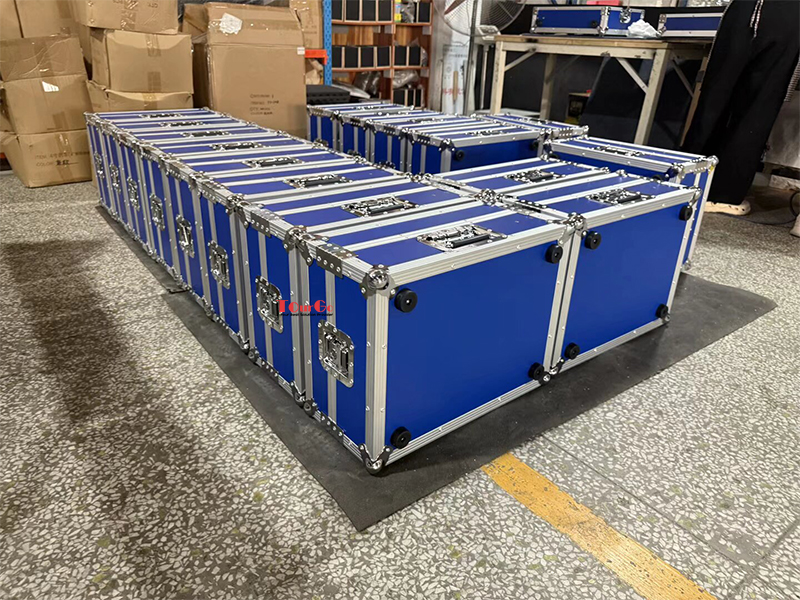
- Branding requirements: logo printing, laser engraving, exterior laminate color
This phase avoids common mistakes such as insufficient foam clearance, wrong wheel load rating or missing compartments for small accessories.
Step 2: Structure & Material Engineering
TourGo engineers select materials and hardware based on the client’s real working conditions.
Common options:
- Shell: 9mm / 12mm plywood with black laminate, ATA heavy-duty standard
- Frame: extruded aluminum alloy profile, reinforced steel corner protectors
- Interior: CNC milled high-density EVA / PE foam, layered foam, removable dividers or shock-mount chassis
- Hardware: butterfly latches, recessed spring handles, heavy-duty caster wheels (swivel + brake), rubber feet, stacking blocks
- Optional upgrades: waterproof sealing, vent valves, pull-out work shelf, built-in power box, TV lift mechanism
For rental houses that reuse cases hundreds of times, we prioritize anti-scratch surface, replaceable hardware and easy maintenance. For one-off shipping of fragile precision gear, we focus on shock absorption and foam precision.
Step 3: CAD Drawing & Layout Approval
Once the specification list is locked, our design team delivers 2D and 3D CAD drawings, including outer dimensions, internal compartment layout, foam cavity drawing and hardware position.
Clients can review:
- Whether each device sits snugly without shifting
- Clearance for cables, connectors and protruding knobs
- Ergonomics: weight balance, handle position, wheel direction
- Stacking height and loading direction
Revisions are allowed at this stage. We will update the drawing until the client fully approves it before sampling.
Step 4: Prototype / Sample Making & Fit Testing
After drawing confirmation, we produce a pre-production sample.
Our QC team runs a practical fit test:
- Put the actual equipment inside to check insertion and removal
- Test latches, wheels, lid opening and extended tables
- Check foam holding performance, no loose rattling during shaking test
- Verify overall weight and handling comfort
If the sample needs adjustment on foam shape, compartment size or hardware upgrade, we modify and recheck. Sample sign-off is mandatory before mass production.
Step 5: Mass Production, QC & Delivery
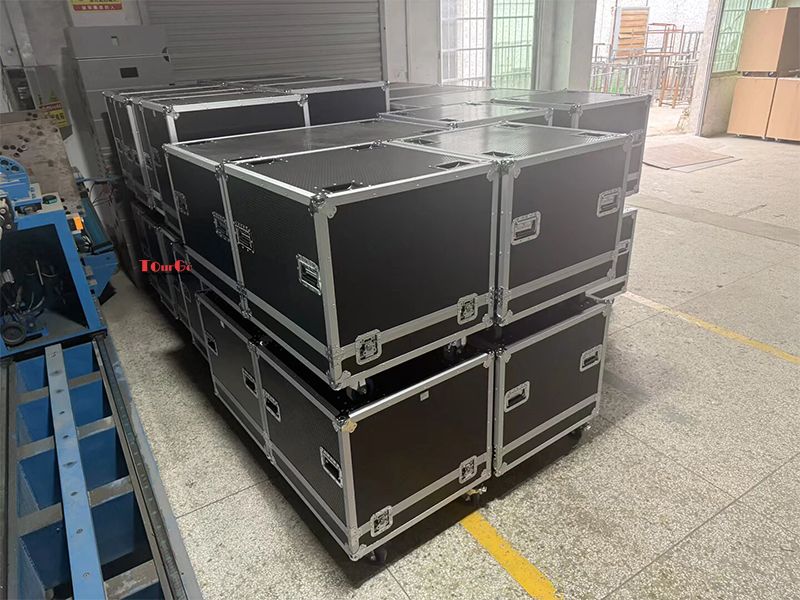
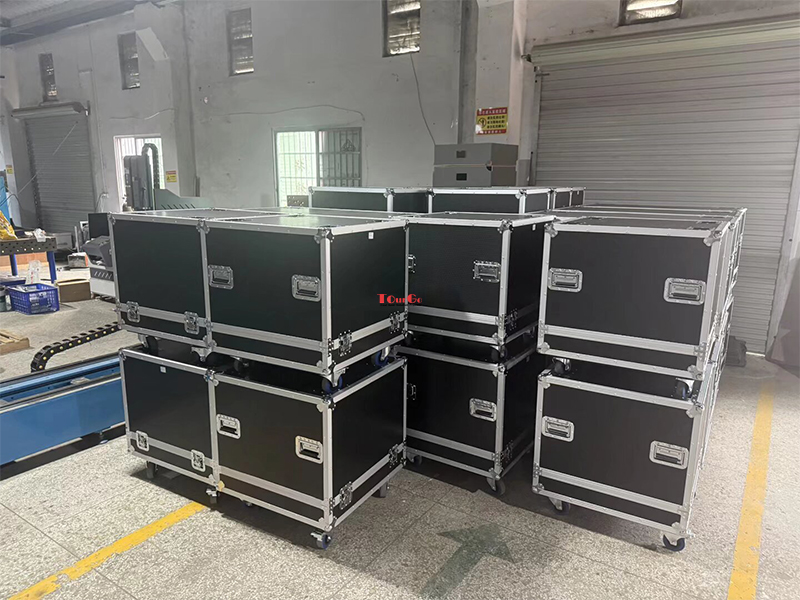
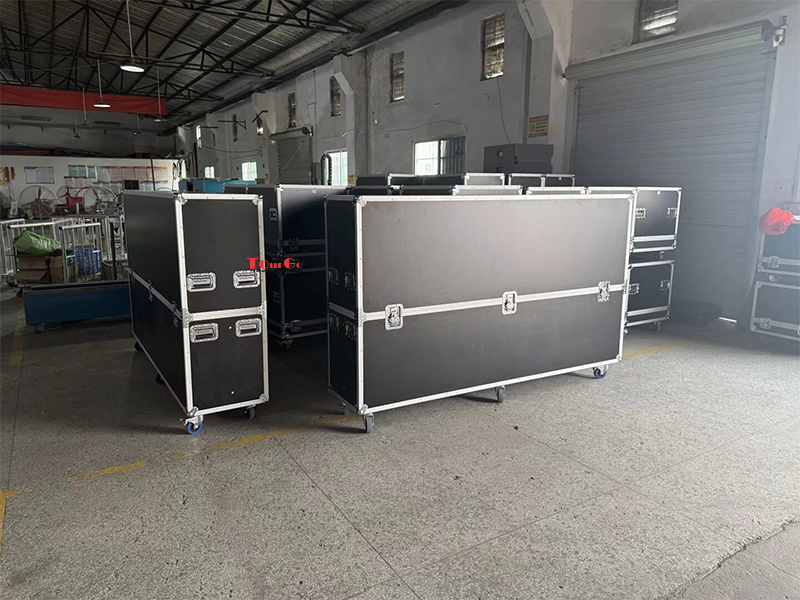
In mass production, every case follows the approved drawing. Our inspection covers dimension tolerance, cutting accuracy, glue bonding, hardware fastening, surface finish and branding effect. All cases are cleaned and packed securely for export.
TourGo supports mixed container orders and batch customization for rental fleets.
TourGo Custom Flight Case FAQ
Q1: Can I supply my own design or drawing?
A: Yes. We accept client CAD files, then review manufacturability, optimize structure and quote accordingly.
Q2: What equipment can TourGo custom flight cases hold?
A: LED panels, TV screens, speakers, DJ mixers, cameras, interpreter booth parts, stage accessories, medical and broadcast gear.
Q3: What is the typical lead time?
A: Sample: 7–12 working days; mass production depends on quantity and complexity. Our sales will confirm the schedule at quotation.
Q4: Is OEM / private logo available?
A: Definitely. Silk print, laser engraving and custom laminate colors are all supported.
Post time: Nov-05-2026