
When buyer Source Custom Event Equipment: What Should Look For?
Global event production, trade show and corporate activation demand for custom-built event equipment keeps rising. While custom stages, LED screen cases, speaker flight cases, truss systems, branded backdrops and modular booths help brands stand out, many international buyers face costly delays, structural failures, non-compliant materials and mismatched branding when sourcing from inexperienced manufacturers. Industry experts share a practical checklist for buyers evaluating custom event equipment partners before locking orders.
Custom event hardware differs sharply from off-the-shelf gear. Every project carries unique venue limits, load requirements, branding rules and tight show deadlines. Low upfront pricing often hides risks: weak aluminum grades, missing fire certificates, poor portability, unclear change-order policies and limited after-delivery support. Event equipment failure can disrupt product launches, concerts and large trade shows, bringing heavy financial and reputational losses.
Core factors buyers must verify
1. In-house engineering & customization capability
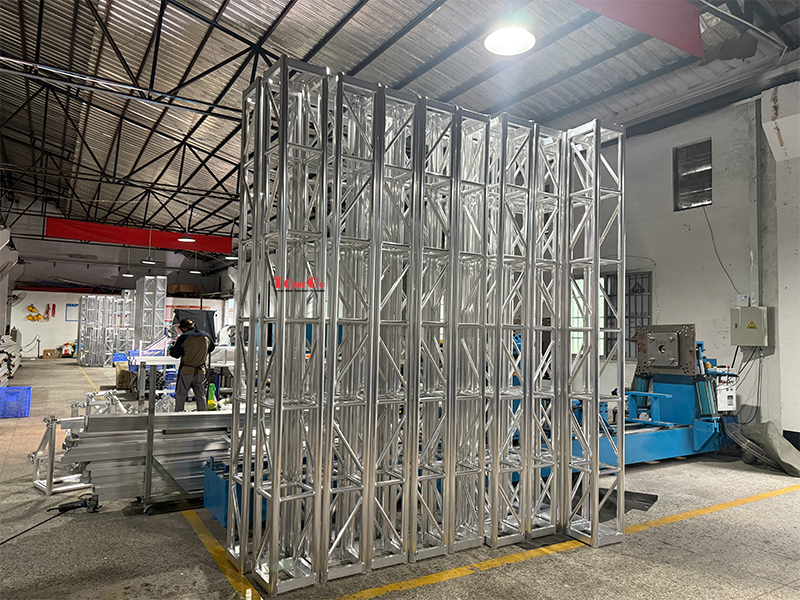
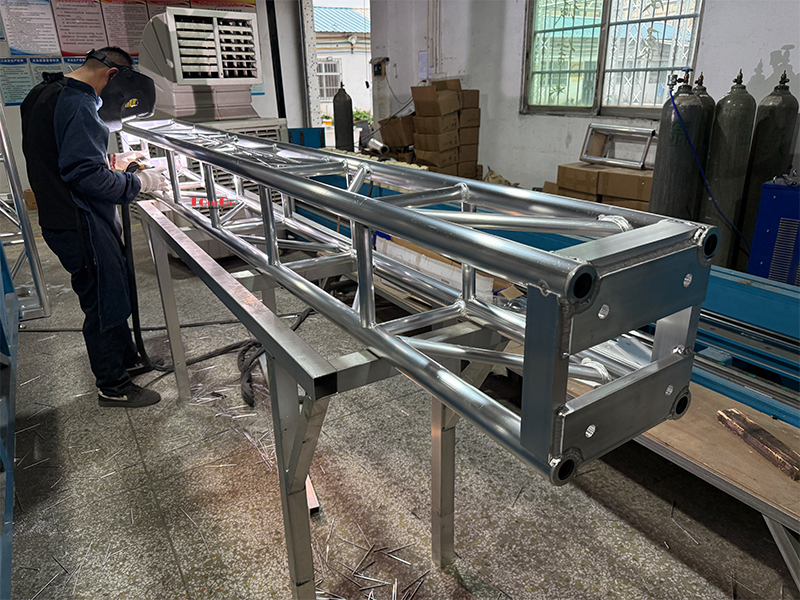
First, confirm whether the supplier owns end-to-end production, including design, prototyping, CNC processing, welding, graphic printing and final assembly, rather than fully outsourcing work. Qualified manufacturers should translate concept drawings into feasible structures, suggest optimisations for transport and quick setup, and provide pre-production samples for sign-off. Buyers should check past project portfolios matching similar event types: touring shows, fixed exhibition booths, outdoor festivals or corporate galas.
2. Material grade, structural safety and global compliance
Safety is non-negotiable for rigging, staging and load-bearing frames. For aluminum truss and stage frames, ask for material test reports (e.g. 6061-T6 aluminum), load capacity statements and third-party structural test certificates. Indoor fabrics and decorative components need flame-retardant certifications aligned with target markets: CPAI-84 for North America, EN 13501-1 for EU venues. Electrical parts must carry CE, RoHS or FCC certificates where applicable. Buyers should never accept verbal safety promises; full certification documents must accompany shipments for venue inspection.
3. Practical design for transport, fast setup and reusability
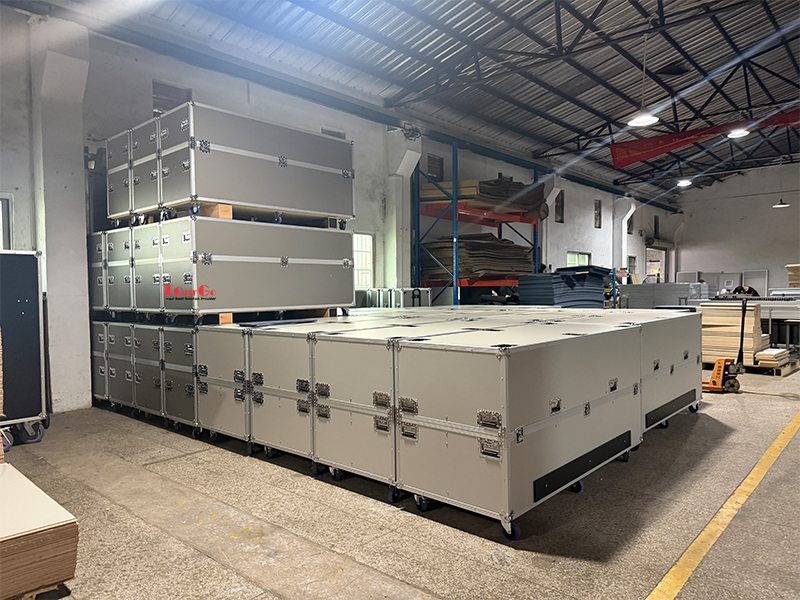
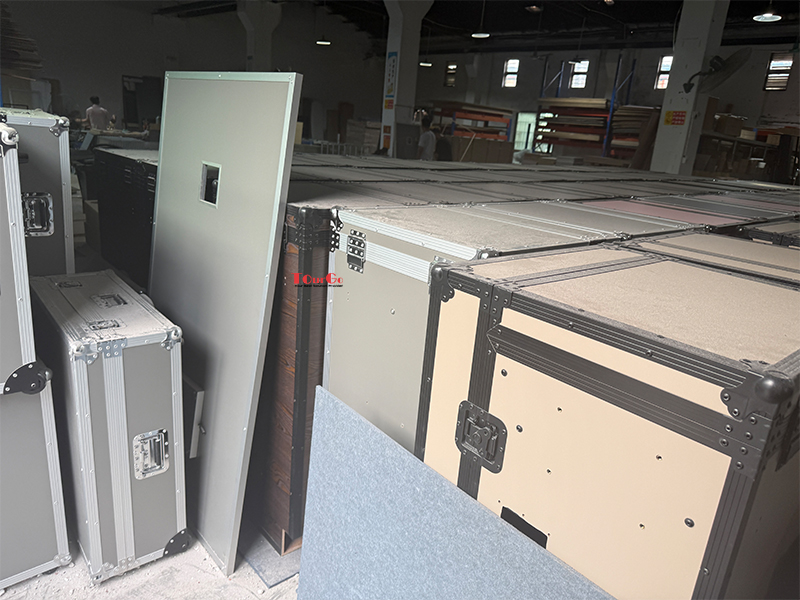
Professional event teams prioritise modular, lightweight designs that pack into flight cases, reduce shipping volume and cut labour time for build and strike. Good custom equipment features quick-lock connections, labelled parts, stackable packaging and protective casings. Reusability directly lowers long-term costs for touring clients. Buyers should ask suppliers to demonstrate assembly workflows and confirm whether spare pins, brackets and replacement panels are available separately.
4. Transparent quotation, timeline and change control
Hidden fees are one of the most common pain points. A valid quote should break down design fee, prototyping, raw material, surface finishing, graphic printing, packaging and freight separately. Lead time must include sampling, formal inspection and buffer days before the event. The contract needs clear rules for revision requests: how many free design adjustments are included, unit price changes for specification updates, and penalty terms for production delays. Avoid vague “subject to final confirmation” clauses with no written change order process.
5. Quality inspection, packaging and logistics support
Reliable suppliers carry out pre-shipment inspection against the approved sample and technical drawing. For cross-border shipments, custom event gear needs shock-resistant, export-grade packaging. Experienced manufacturers can assist with packing lists, commercial invoices and marking for sea or air freight, and advise buyers on port transit time and customs risks. For urgent events, confirm whether expedited production is available and what trade-offs apply.
6. After-sales service and spare parts availability
Custom fabrications often have unique dimensions. Buyers should confirm warranty terms, repair support and lead time for replacement components. Long-term partners maintain drawing archives so spare parts can be reproduced years later, which is critical for touring fleets and repeat trade show programmes.
FAQ:
Q: Is a sample mandatory before bulk custom production?
A: Highly recommended. A physical sample validates dimension, colour matching, build quality and assembly experience, avoiding mass rework. For large heavy structures, a 3D rendering plus partial prototype is acceptable for initial review.
Q: What is the biggest mistake buyers make when sourcing custom event equipment?
A: Selecting suppliers only based on the lowest unit price without auditing safety certificates, factory capacity and event-industry track record. Venues will reject non-compliant rigging and decorative materials, leaving buyers stuck right before opening day.
Q: Can custom designs be adjusted to fit different venues later?
A: Yes, if modularity is built into the original design. Share your full roadmap with the manufacturer upfront, so they engineer adjustable spans, interchangeable panels and compatible accessories.
Custom event equipment is more than branded hardware; it is a mission-critical part of live experiences. Buyers who focus on verified safety standards, in-house manufacturing, modular practicality, clear contracts and responsive after-sales support can reduce sourcing risk and build a reliable supply chain for future global events.
At TourGo, we have worked in the professional event equipment sector since 1998. We manufacture aluminum truss systems, modular stage products, customized flight cases, interpreter booths, and Ninja Warrior / OCR obstacles.
Many event production and rental projects are not off-the-shelf purchases. Buyers need special dimensions, custom finishes, integrated equipment protection, modular layouts, or a structure that fits a particular venue. Our team works from project dimensions, reference pictures, technical sketches, and application details to discuss practical manufacturing options. We also help customers evaluate packaging efficiency and international freight arrangements. welcome to inquiry!
Post time: Oct-21-2026